01 / 06
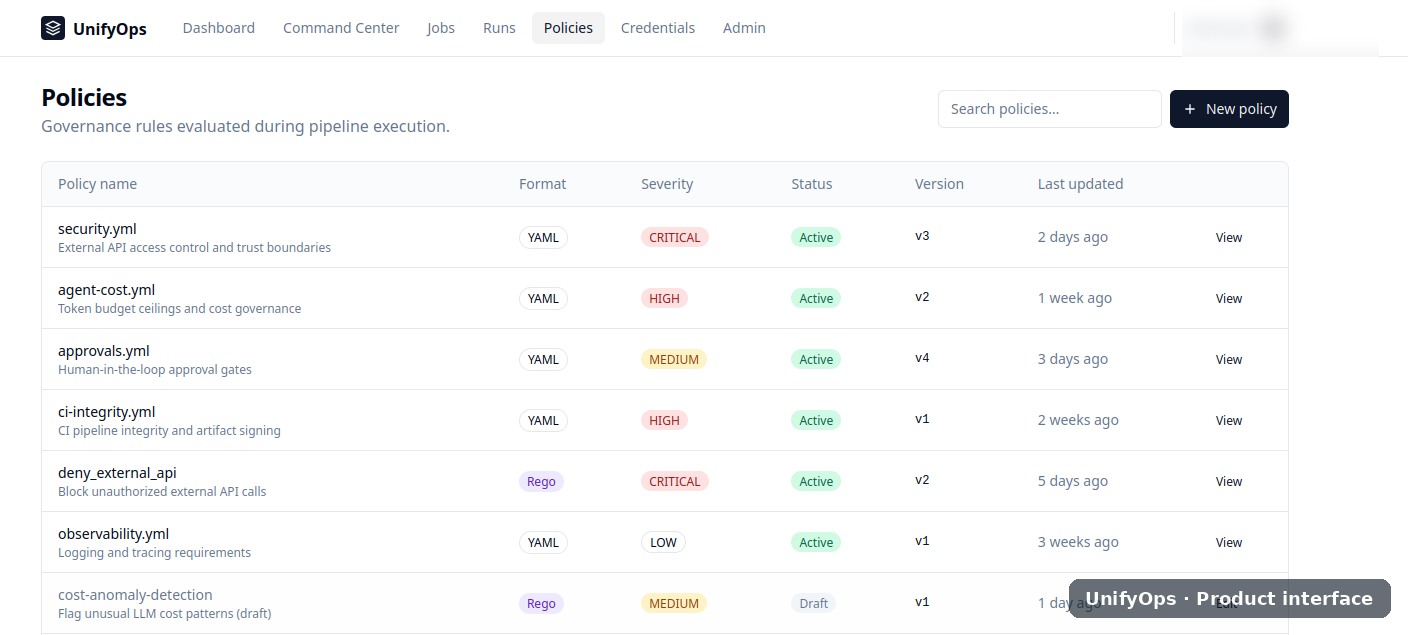
Policy-driven control
Define and enforce enterprise rules for security, approvals, cost, integrity, external access and other governed conditions.
UnifyOps brings together the capabilities required to understand, govern, execute, verify and improve AI-enabled work. Each capability has its own role while operating under a consistent enterprise trust model.
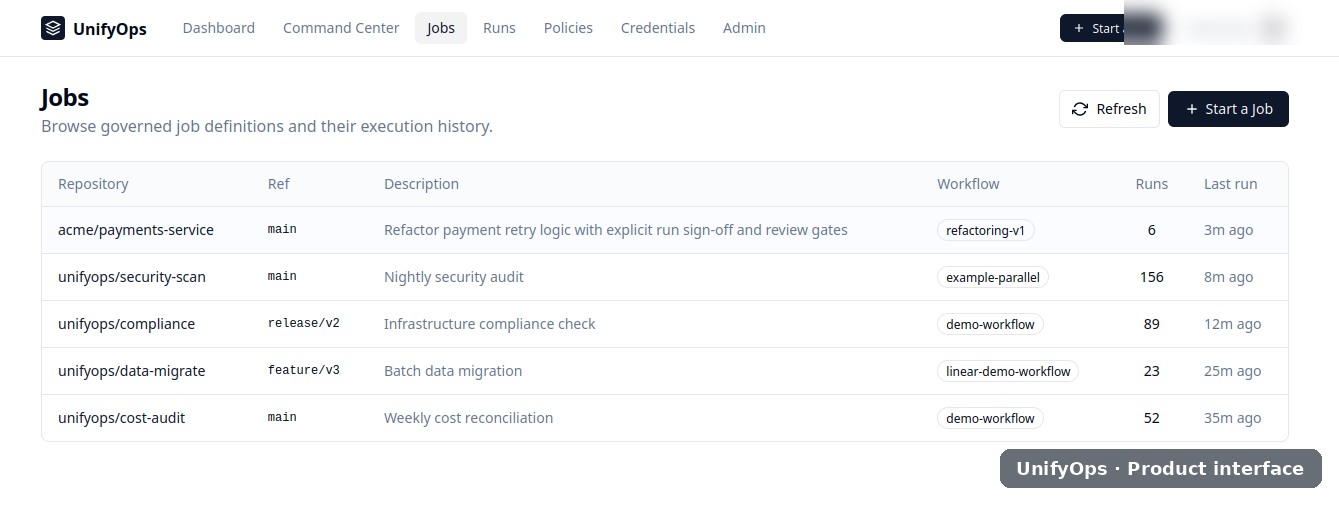
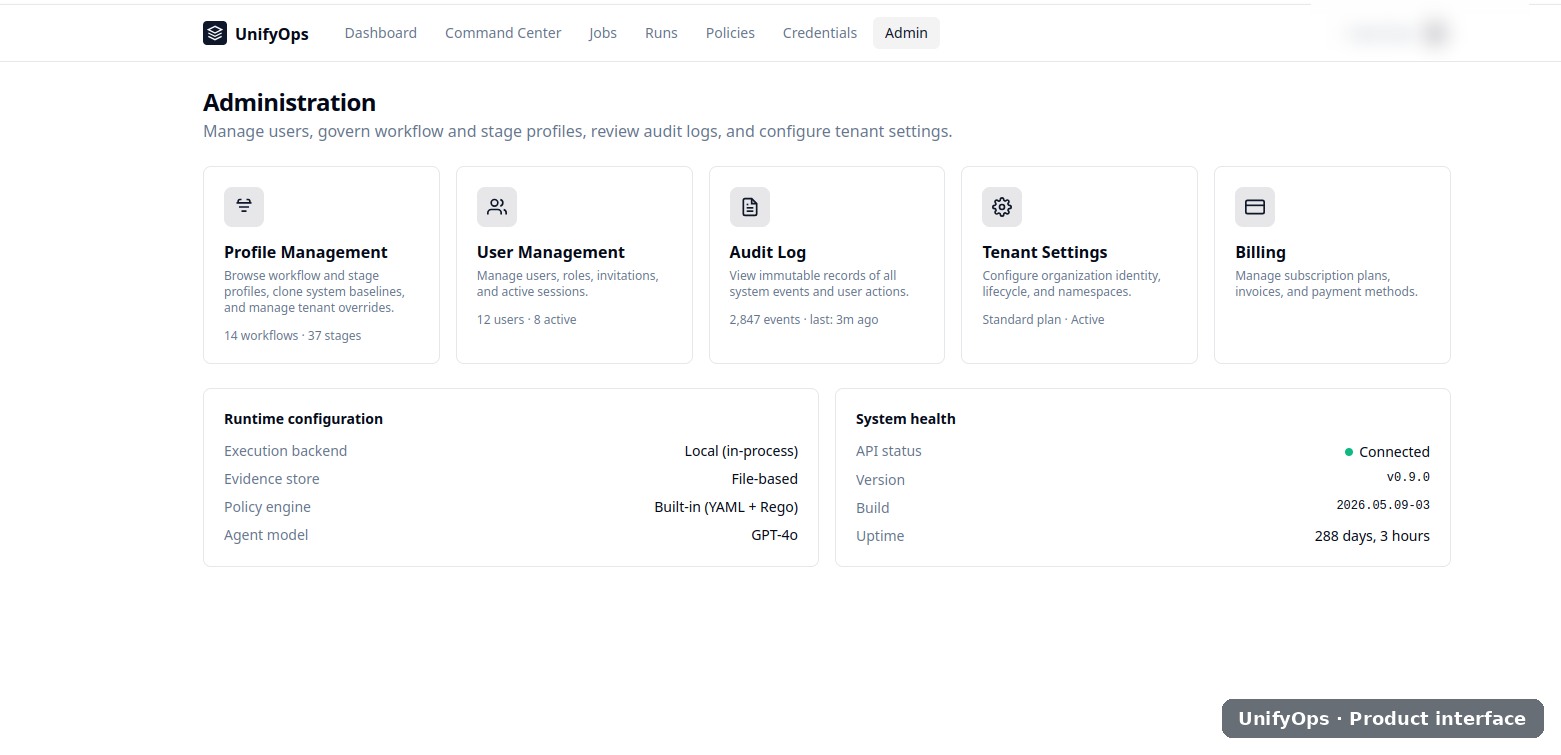
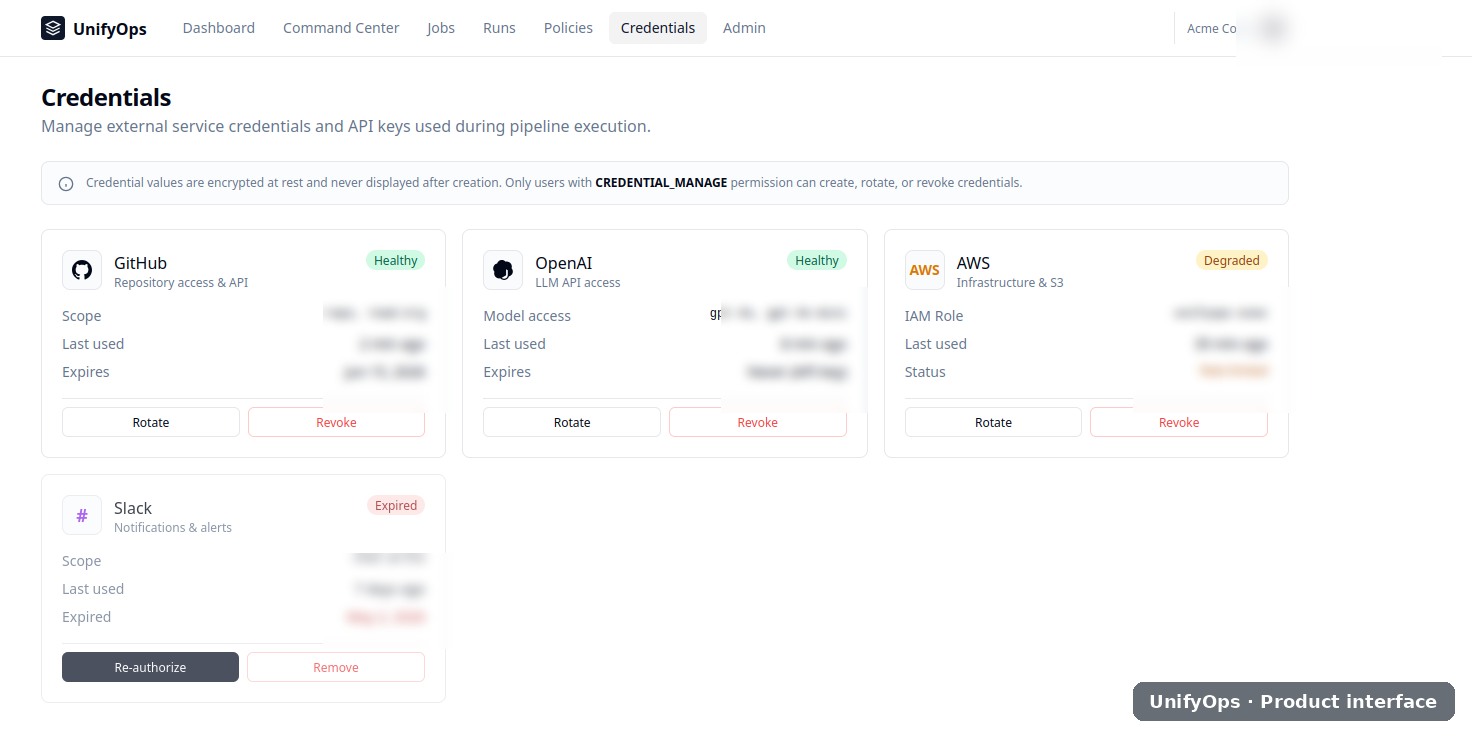
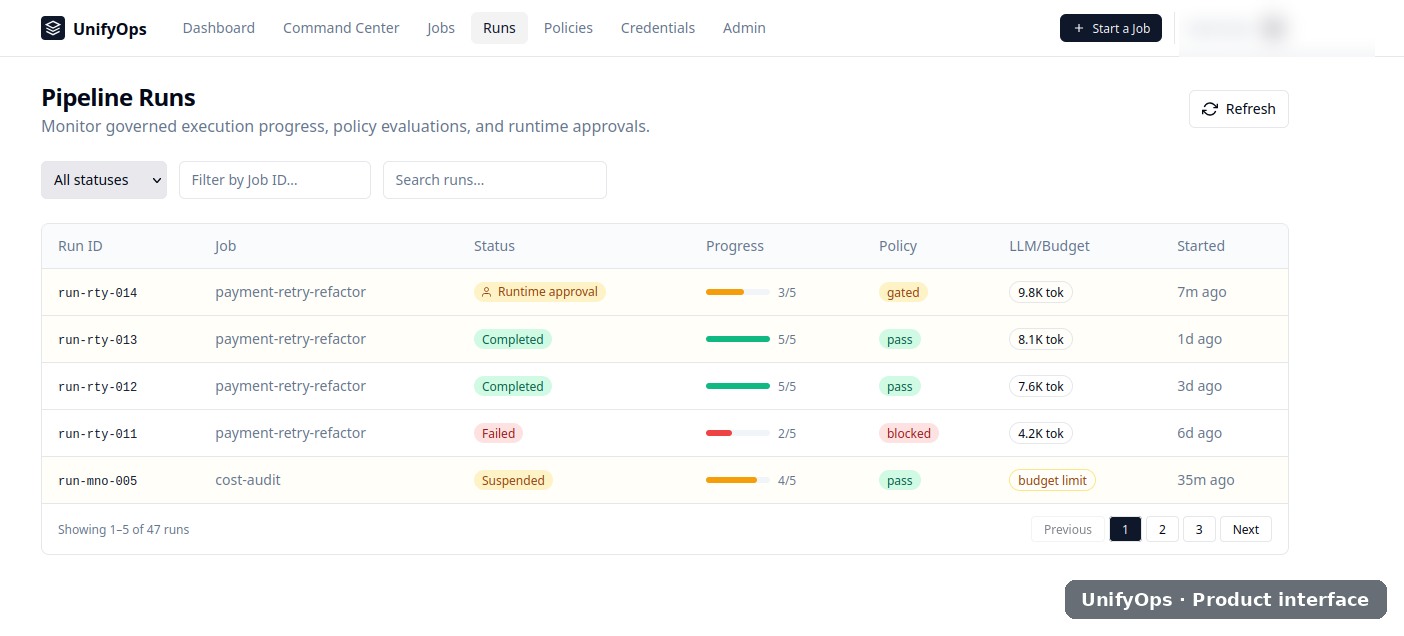
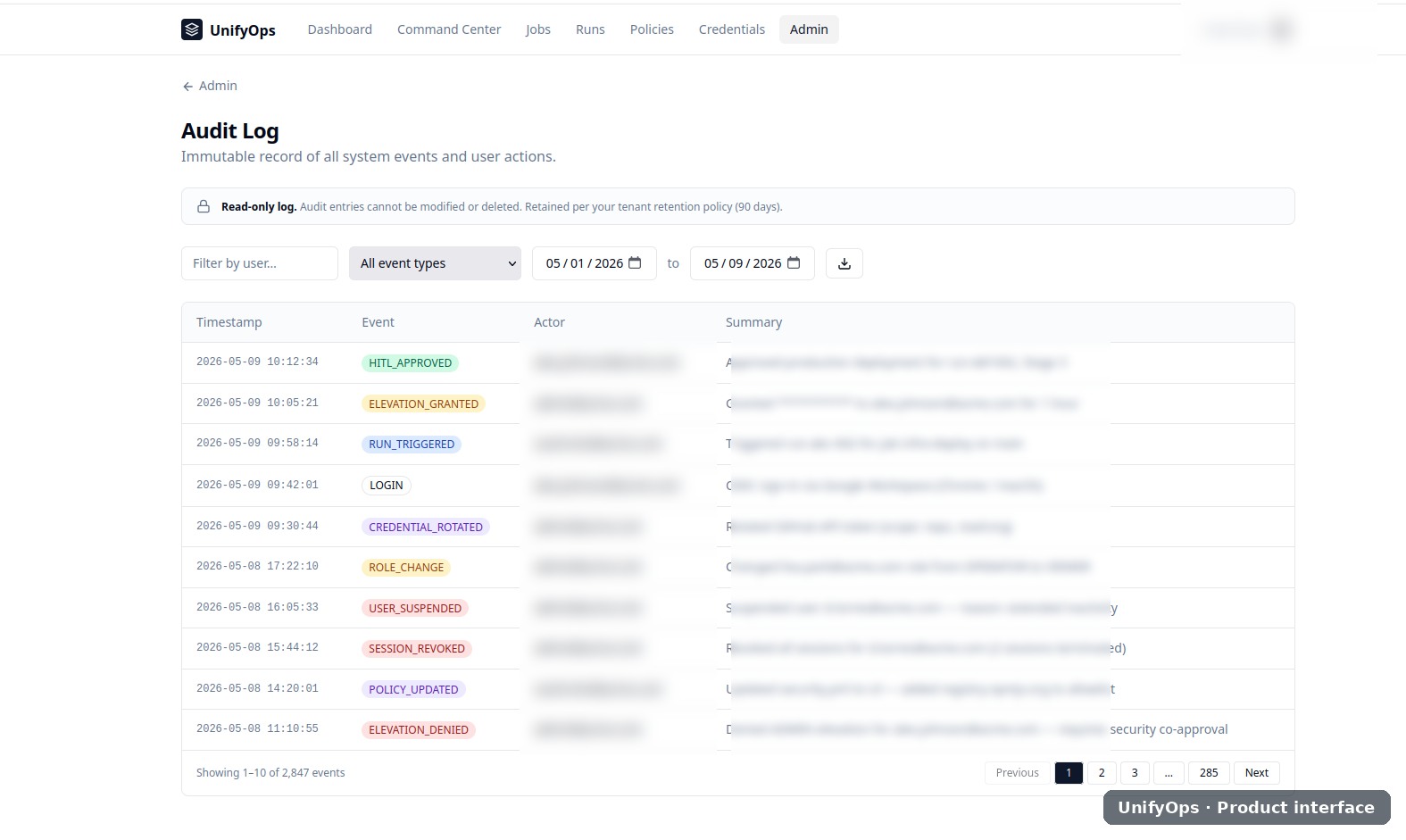
A compact view of selected UnifyOps capabilities in operation.
Capabilities are presented here at the commercial level. The underlying implementation remains deliberately abstracted from the public product story.
Support organizational separation, governed access and enterprise boundaries so AI-enabled work can be operated across teams and environments without collapsing control into a single shared context.
Define repeatable or adaptive ways of working with configurable stages, controls and approval points while preserving a consistent governance model.
Start from the outcome the organization wants, then translate that intent into governed planning and execution rather than forcing users to pre-author every technical step.
Bring relevant code, documentation, relationships, impact and organizational context into AI-enabled work so decisions are grounded in the environment in which they will operate.
Evaluate work against defined expectations so quality, completeness and readiness can be assessed rather than inferred from model confidence alone.
Apply independent review capabilities where the work requires additional scrutiny, including implementation review, security review and other domain-specific assurance checks.
Use different models and agent systems according to task, policy, cost and enterprise need while maintaining a common operating and control model.
Keep significant AI-enabled work inspectable through durable evidence, execution history and reviewable outcomes.
Connect AI-enabled work with repositories, collaboration tools, delivery systems and enterprise services without making any single integration the center of the platform.
Intelligence helps AI understand. Workflows shape execution. Governance defines authority. Evaluation and reviewers test the outcome. Evidence preserves accountability. Together they form a coherent enterprise operating model.